How to Break a Bad Habit Without Shame: A Gentle 5-Step Method for Women Over 50
Philippa Stevens

You know the moment. It is 9:40 at night, the kitchen is finally quiet, and you are standing at the counter with the pantry door open. You are not hungry. You are tired. You are also already telling yourself off, and you have not even reached for anything yet.
If that scene sounds familiar, you are not weak and you are not out of time. You are caught in a loop that has been rehearsed thousands of times, and willpower alone was never designed to break it. Learning how to break a bad habit without shame is not a softer version of the work. It is the only version that tends to hold, because shame keeps the loop running while curiosity quietly loosens it.
I work one on one with women in their fifties, and the habits that come up most are rarely dramatic. It is the second glass of wine that became nightly. It is the scroll in bed. It is apologizing before you speak, saying yes when you mean no, or talking to yourself in a tone you would never use with a friend. What these habits share is a job. Each one is doing something for you, usually something that started as comfort and quietly turned into a cage.
Below is a five-step method you can start today. It is designed for a real week with real demands, not a retreat where someone else cooks your meals. Set aside about twenty minutes to begin, and plan on roughly ten minutes a day for the first two weeks.
How to Break a Bad Habit Without Shame: The Five Steps
Step 1. Name the habit as a loop, not a flaw
Start by describing the habit in plain, factual language. Not "I have no self control around sugar" but "around 9:30 most nights, after the dishes, I eat something sweet standing up in the kitchen."
That shift matters because it moves the problem from your character to a pattern you can actually see. A loop has parts: a trigger, a routine, and a payoff. When you can name the parts, you can work on any one of them.
Take ten minutes and write out three recent episodes of your habit. For each one, answer:
- Where was I, and what had just happened? The phone call, the empty house, the email from your sister.
- What was I feeling in my body? Tight shoulders, a hollow feeling in the chest, restlessness, flatness.
- What did the habit give me? A pause. A soft landing. A way to stop thinking. A moment that belonged to no one else.
Here is an example to make it concrete. A woman I will call Ruth, a hypothetical client, described her nightly wine as pure failure. When she wrote out three episodes, she noticed something she had missed: every glass followed a phone call with her aging mother, and the first sip came with a long exhale. The wine was not the problem. The wine was the exhale. That knowledge did not fix anything by itself, but it gave her somewhere useful to aim.
Step 2. Separate the habit from your identity, out loud
Most women over fifty have a file folder of evidence against themselves. I have always been like this. I am the one who cannot say no. I have no discipline. That folder is the shame talking, and shame is a terrible coach.
Here is a practice that sounds almost too simple, and it works. Write down the sentence you say about yourself, then rewrite it as a description of a behavior with a time and a context.
| What you tend to say | What is actually true |
|---|---|
| I have no willpower. | I reach for my phone whenever I feel a gap in the day. |
| I am a people pleaser. | I say yes quickly when someone asks, before I check what I want. |
| I am hopeless with money. | I buy something small when I feel overlooked. |
| I am lazy in the mornings. | I stay in bed because waking up means facing a list I dread. |
Read the right-hand column out loud. Notice that none of those statements are an insult. They are simply information. You cannot problem solve a character flaw, but you can absolutely work with a behavior that happens at a particular time in a particular place.
Step 3. Shrink the habit until it looks almost silly
This is where most attempts collapse. We decide to stop completely, starting Monday, and by Wednesday the whole plan is in pieces on the floor. Ambition is not the issue. The size of the first step is.
Instead of removing the habit, reduce one dimension of it. Shrink the amount, the duration, or the frequency, and pick just one.
- Pour the wine into a smaller glass and drink it at the table, not at the counter.
- Set a timer for ten minutes of scrolling, with your phone plugged in across the room when it goes off.
- Before agreeing to a request, say one sentence: "Let me check my week and get back to you."
- Eat the sweet thing on a plate, sitting down, with a cup of tea beside it.
The point is not that a smaller glass is a cure. The point is that a smaller step keeps you in the game long enough to learn something. Every time you make a change and stay calm, you are collecting proof that you are not helpless. That proof is what confidence is actually built from.

Step 4. Meet the need the habit has been meeting
This is the heart of the work, and it is the step most people skip. A habit that has survived years of good intentions is usually carrying a job that nothing else in your life is doing.
Look back at the third question from Step 1: what did the habit give you? Then ask what else could deliver that, in a way that leaves you feeling steady instead of foggy.
If the payoff is a pause, build a different pause. Three minutes on the back step with a cup of tea and no phone. If the payoff is comfort, consider what comfort you are actually hungry for, and whether you need to ask for it, or give it to yourself more directly. If the payoff is a moment that belongs to you, put twenty minutes on the calendar and defend it the way you would defend a doctor's appointment.
If the payoff is connection, that one is worth naming out loud. A lot of habits that look like overeating or overspending are really loneliness wearing a costume. That is not a verdict on your life. It is a signal worth taking seriously.
Step 5. Plan your reply to a slip before it happens
You will slip. Not because you are failing, but because you are a person learning something new. What determines the outcome is not the slip. It is what you say to yourself in the thirty seconds afterward.
The most common pattern is what I call the spiral. One glass becomes "I have ruined it," which becomes "I may as well finish the bottle," which becomes a week of abandoning the whole plan. The habit was never the main problem. The spiral was.
Write your reply in advance, on paper, so it is ready and does not depend on your mood at 10 p.m. Yours might read: "That happened. I know why, and I know what to try next. I am still the person doing this work." Then do one small resetting action, such as drinking a glass of water, brushing your teeth, or taking five slow breaths before bed.
The habit is not the measure of your character. What you say to yourself after a slip is what decides whether the habit keeps its grip.
Some women find it helps to keep a short note on the fridge or in a phone memo, written in their own words. Not a lecture. A sentence that sounds like a kind friend.
What to expect in the first two weeks
I am careful about promises, because I have seen too many women arrive expecting a finish line and leave feeling like they failed when real life showed up. So here is what I have found is more honest and more useful: expect unevenness, and expect the uncomfortable part to peak before the new pattern feels natural.
You may notice a hollow feeling in the evening where the habit used to be. That is not a sign the method is wrong. It is the space where something new has to go, and it tends to feel louder on quiet days.
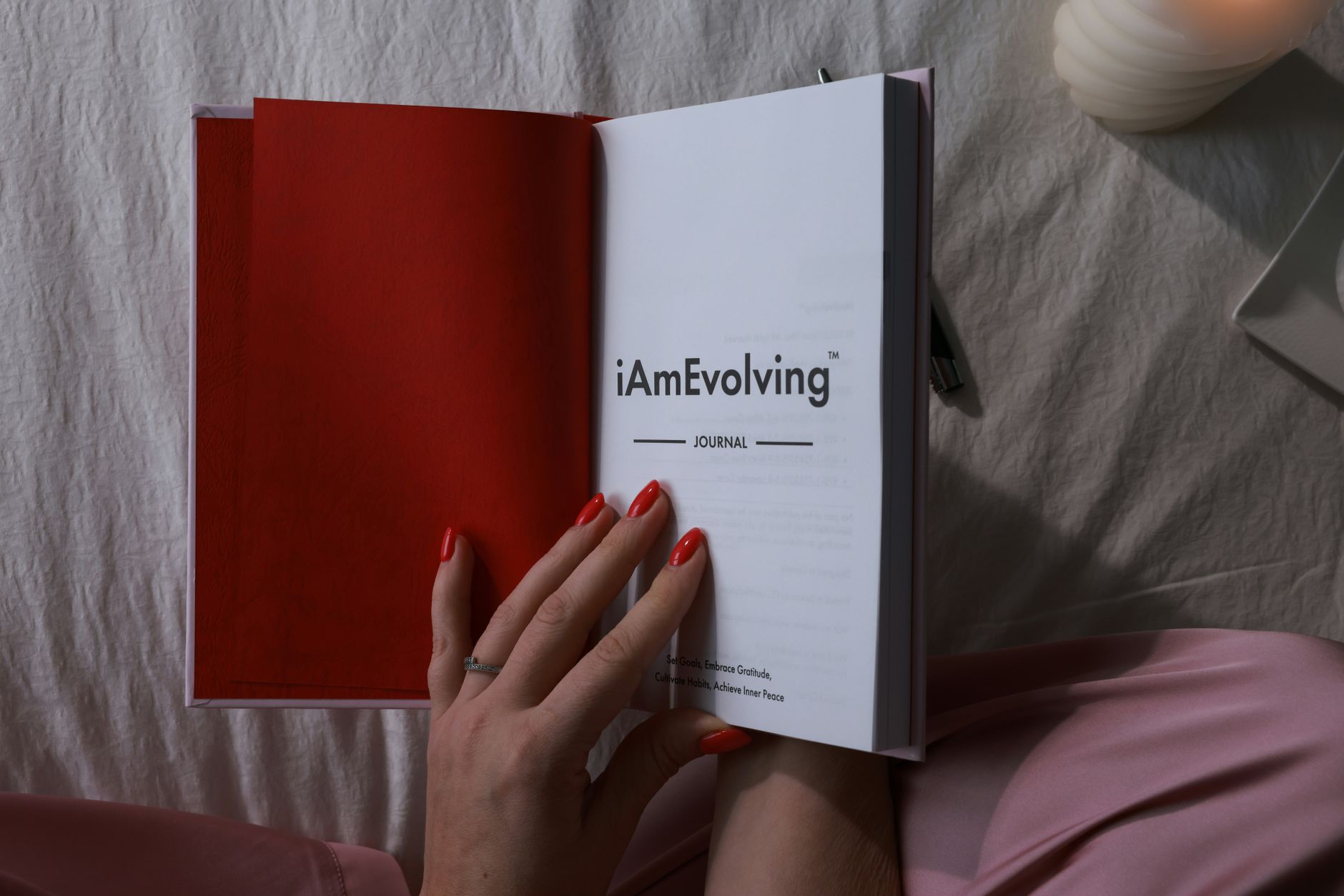
Two things make this stretch easier. First, keep the plan small enough that you can do it on a bad week, not just a good one. Second, tell one person what you are working on. Not so they can police you, but so the effort is witnessed. Shame grows in secrecy and shrinks in daylight.
A suggested rhythm for the first fourteen days, totaling roughly ten minutes a day plus a weekly review:
- Days 1 to 3: Write out your loops and your replies to a slip. About fifteen minutes on day one, five minutes after.
- Days 4 to 10: Practise one shrunken version of the habit and one replacement for the need it meets. About ten minutes a day.
- Day 7: Review what happened without judging it. Ten minutes.
- Days 11 to 14: Keep going, and add one sentence a day in a notebook about how the evening felt.
- Day 14: Ten-minute review. What surprised you, what will you keep, what will you adjust.
Three mindset shifts that make the habit let go faster
Stop aiming for the old you
A lot of the women I work with are trying to get back to how they were at forty. That goal has a hidden cruelty in it, because it turns this decade of your life into a repair job. You are not restoring a past version of yourself. You are deciding what kind of fifty-something woman you want to be, which is a far more interesting question and a much better use of the effort.
Notice the voice, then answer it
You may have a running commentary that sounds like a disappointed parent. Some women call it the inner critic, others just call it the voice that starts at night. Whatever you name it, treat it as a habit in its own right. When you catch it, write one line of what it said, and then one line of what is actually true. Over a couple of weeks, you build a record of the difference between the voice and the facts. That record is quiet, unglamorous confidence, and it lasts.
Let the change be visible to other people
Habits often protect a role you have played for a long time, the one who manages everything, or the one who never makes a fuss. When you start declining requests or taking twenty minutes for yourself, someone may comment. That is not evidence you are doing it wrong. It is the habit's ecosystem noticing a shift. Have a calm reply ready, such as "I am trying something different with my evenings," and leave it there.
When to get support, and what that looks like
Some of this work you can absolutely do alone, and this guide is meant to be enough to start today. But there are moments when doing it in conversation with a coach changes the pace, because the pattern is easier to see from outside.
Consider outside support if any of these sound like you:
- You have stopped and started the same habit many times, and each attempt leaves you more convinced the problem is you.
- The habit is tangled with something tender, such as grief, a marriage that changed, or a body that no longer behaves the way it used to.
- You can see the pattern clearly on paper but cannot seem to shift it in the moment.
- You keep shrinking yourself in rooms, and you are tired of it.
A good coach will not hand you a rulebook. They will ask what the habit is doing for you, help you design a next step small enough to survive a hard week, and stay steady while you learn to speak to yourself differently. Sometimes the most valuable thing that happens in a session is hearing your own sentence out loud and realizing it is not the truth.
If you want a place to begin before your next session, or before you decide whether coaching is right, do this today. Write down one habit, the time it usually shows up, the need it meets, and the sentence you will say to yourself if it happens tonight. Four lines. That is all.
You are not starting over. You are finally working with yourself instead of against yourself, and that is a far kinder place to begin.


